OUR FOCUS AREA
Preserving Intangible Heritage
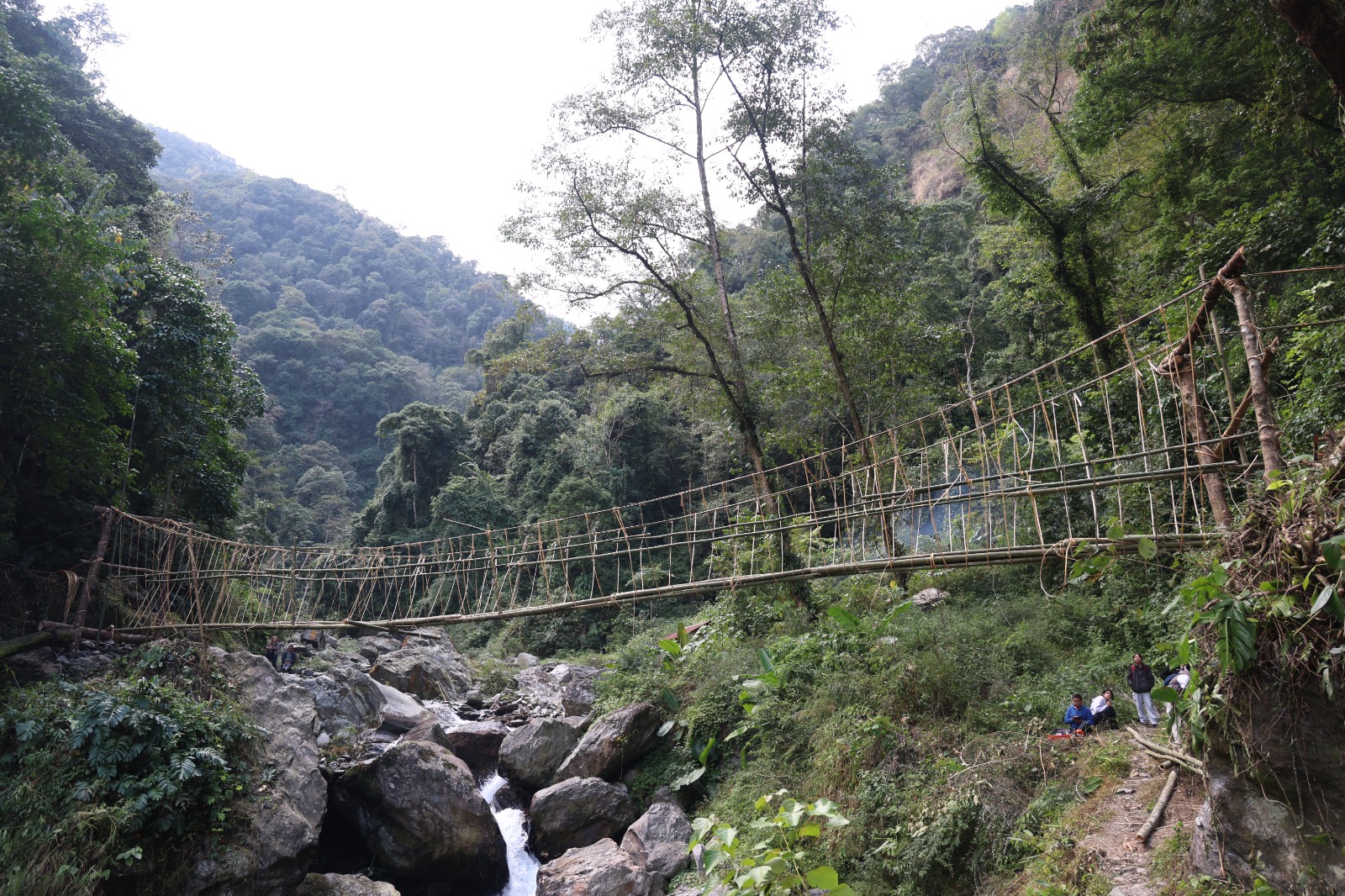
Lepcha Traditional Cane Bridge (Ru Soam)
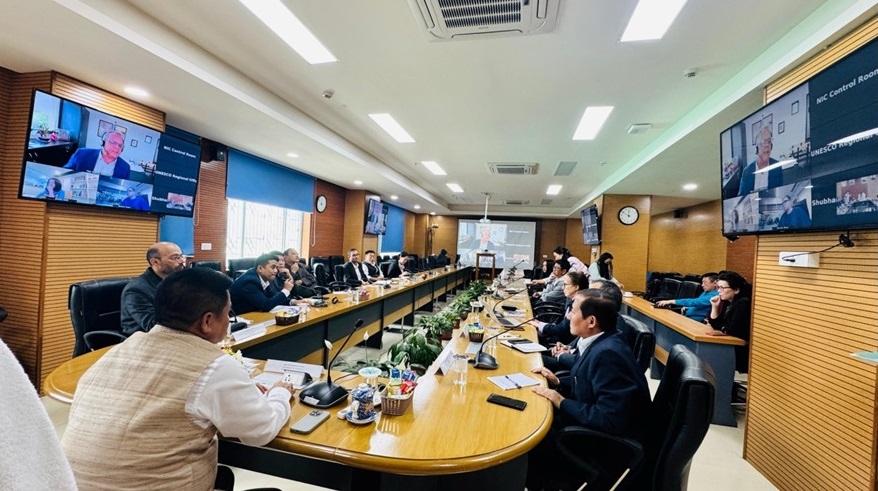
In collaboration with UNESCO, the Department is working on the documentation and recognition of intangible cultural heritage of Sikkim. A key focus is the preservation of the "Sikkim Lepcha Traditional Cane Bridge – Ru Soam", a unique symbol of indigenous engineering and heritage. The traditional knowledge, skills and social practices of bridge building form an integral part of the region’s living cultural heritage. Additionally, this documentation and recognition is crucial because it can be used as disaster resilience during the natural calamities like GLOF, landslides and earthquake in the hilly terrain and Himalayan downstream settlements of Sikkim.
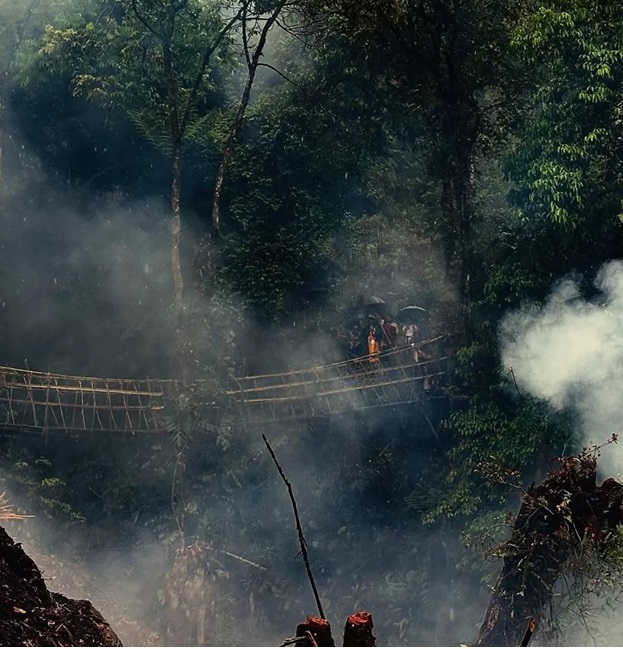
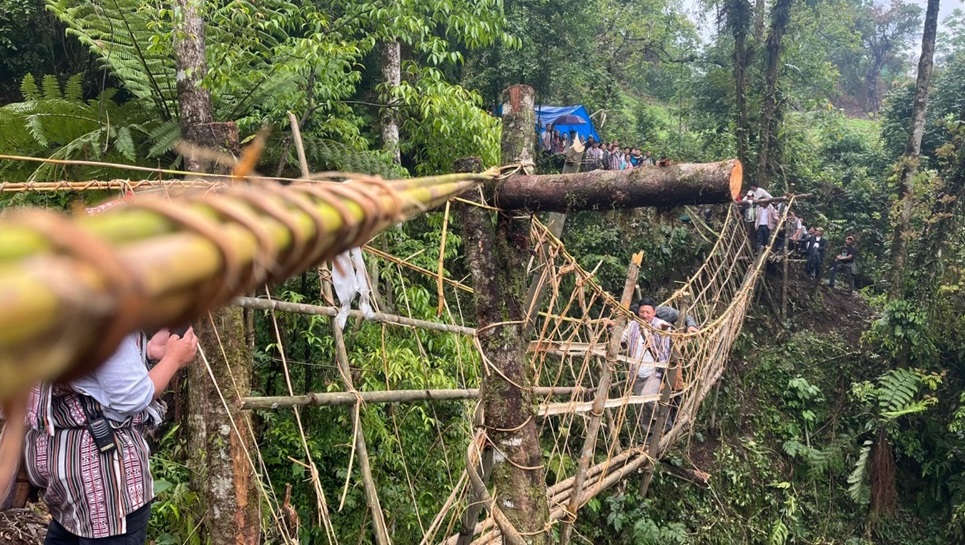
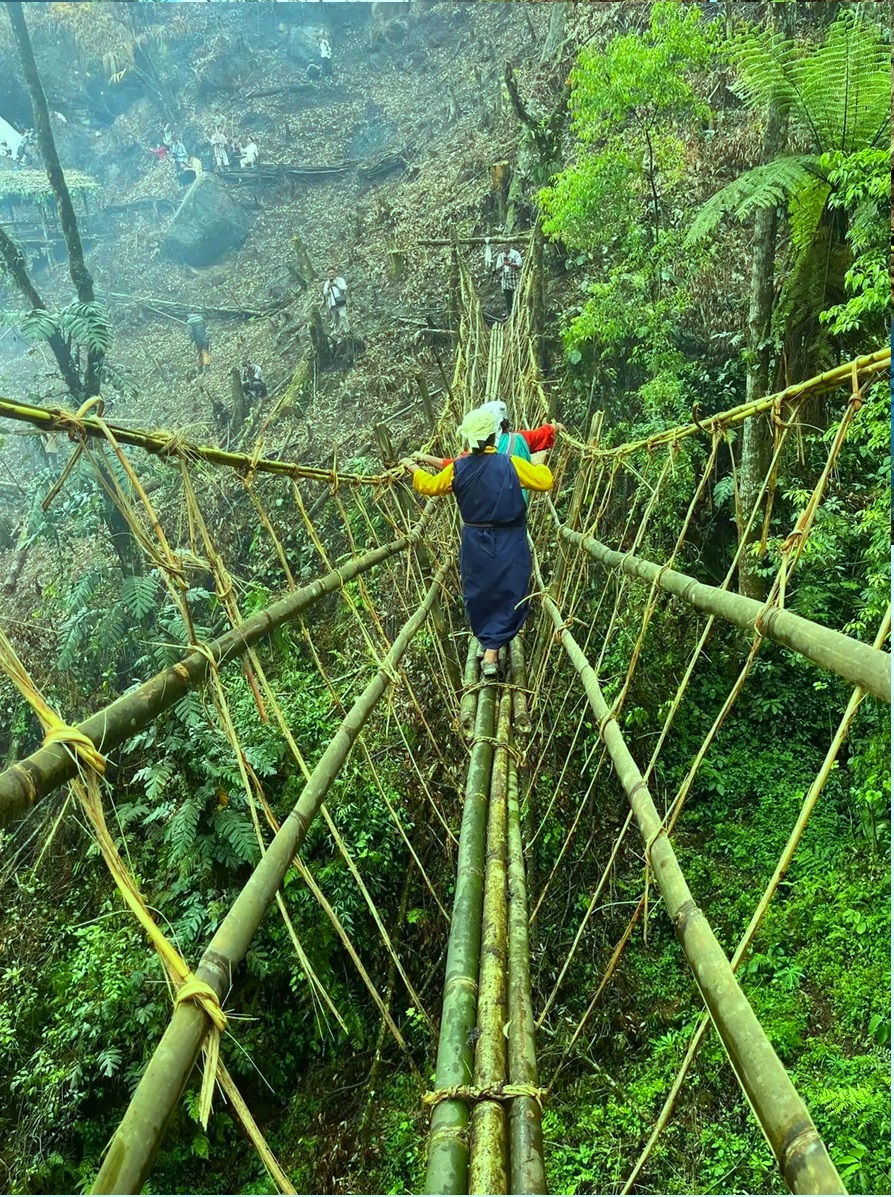
Sikkim Lepcha Traditional Cane Bridge- Ru Soam at Pentong, Dzongu, North Sikkim
The Lepcha cane bridge is a traditional suspension footbridge built primarily from cane, along with bamboo. For generations,
these bridges have enabled communities in the Sikkim Himalayas to cross deep gorges and fast-flowing rivers in a landscape
shaped by steep terrain, dense forests and heavy monsoon rains. Beyond a physical connection, they represent a living tradition
of craftsmanship, ecological knowledge and collective responsibility.
What makes the Lepcha cane bridge unique is its construction that only takes a few days to build. It is built without modern
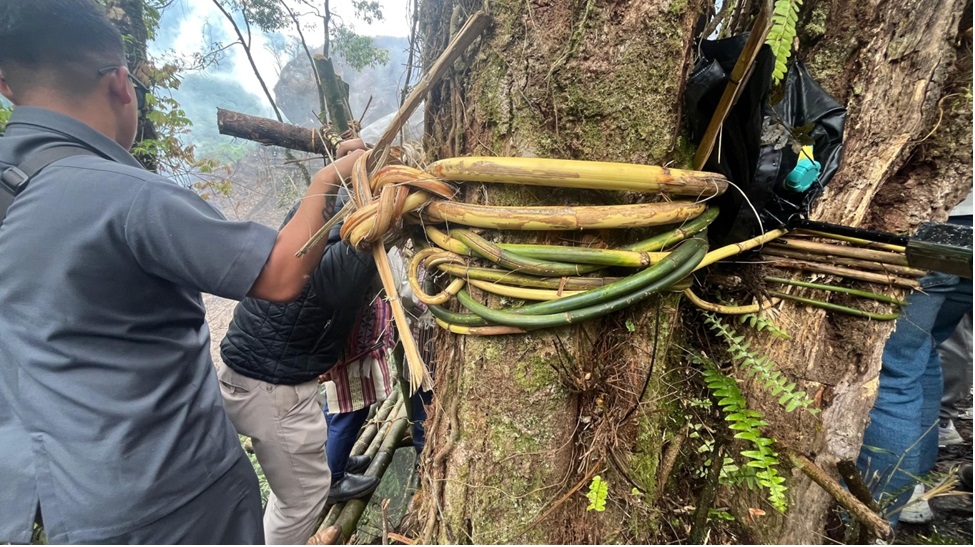
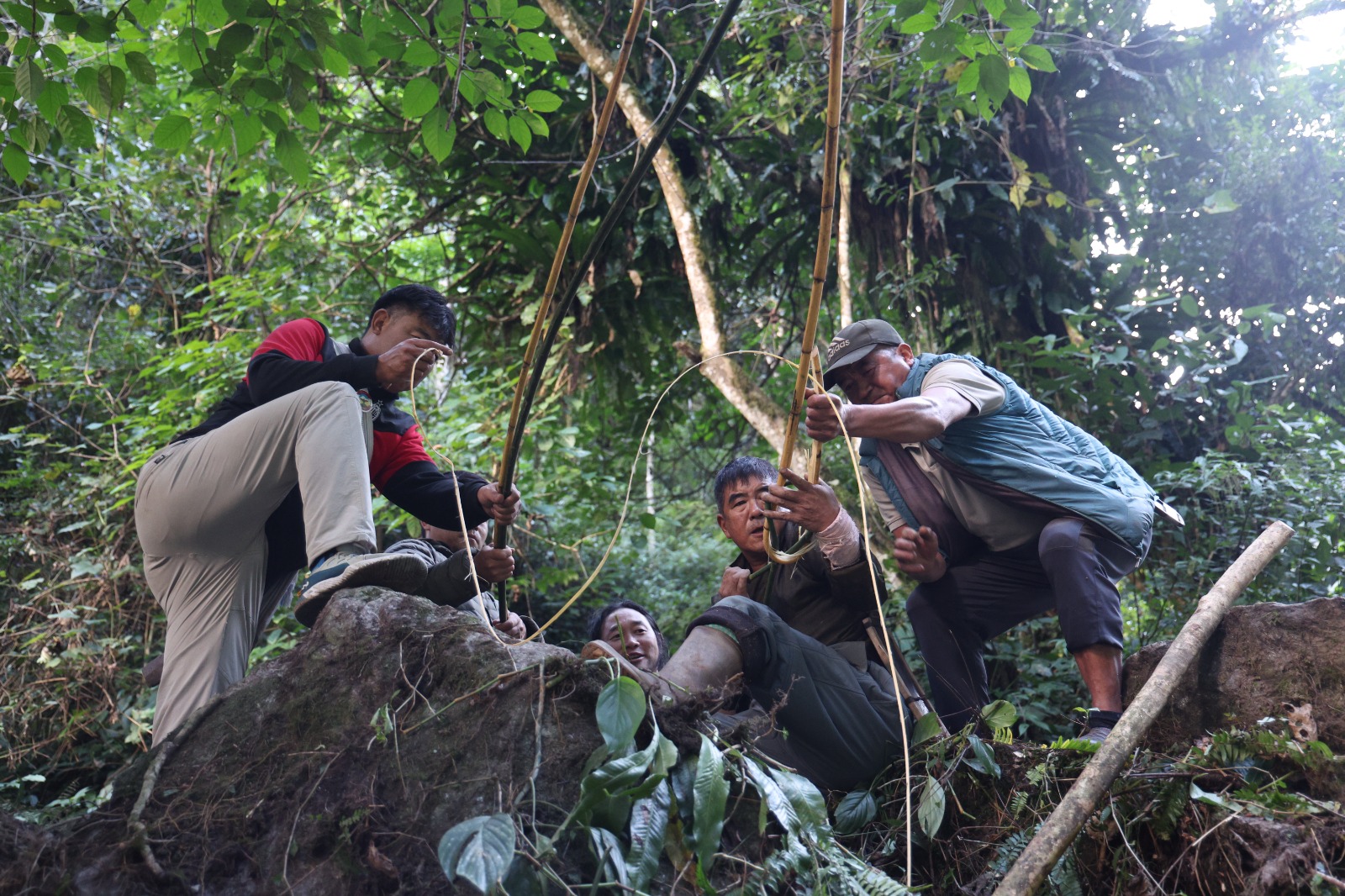
industrial materials such as steel or concrete. Instead, strong cane vines are carefully selected, harvested and tied together
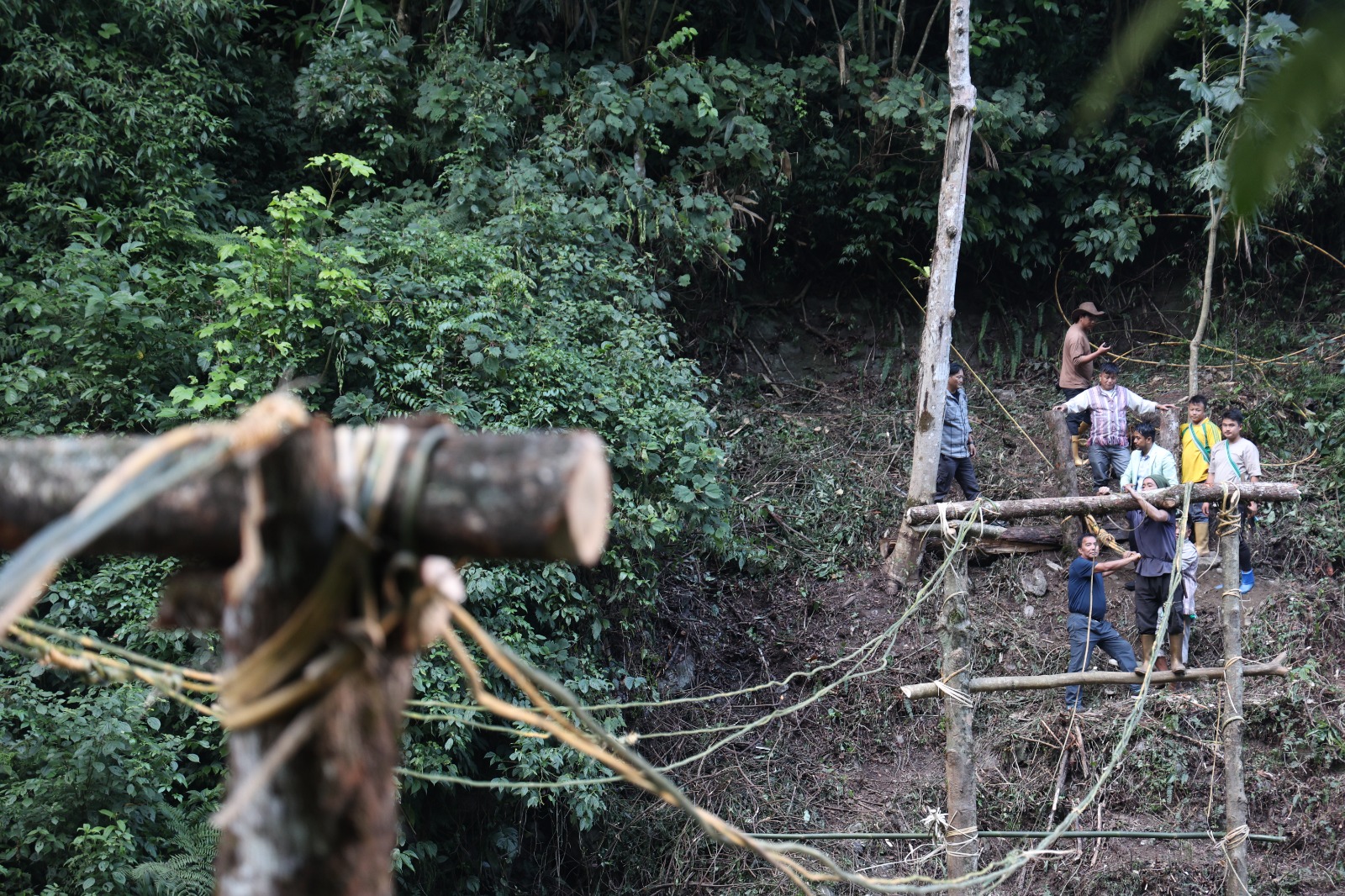
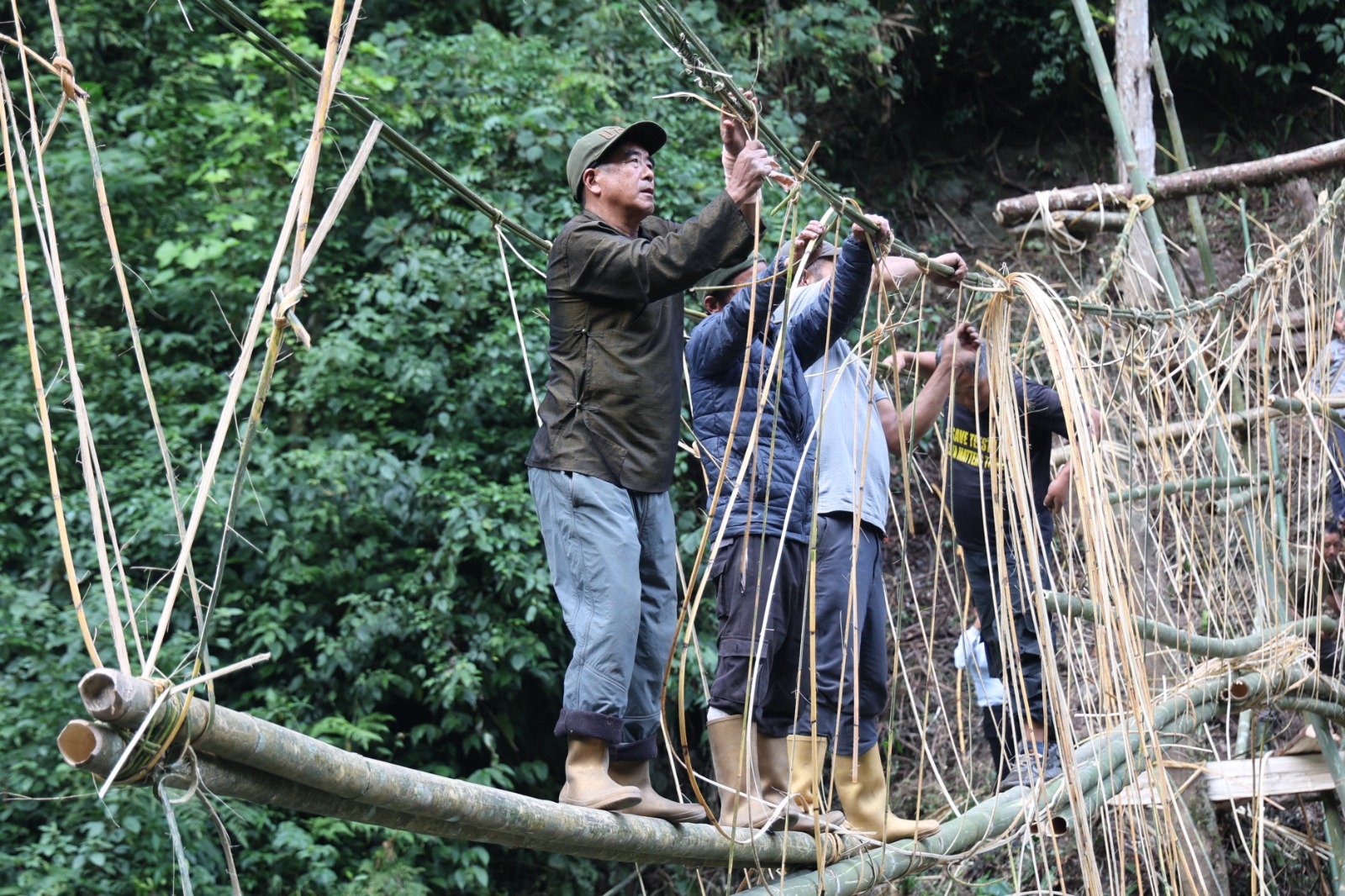
to form the two main suspension lines. Knotted cane loops support a bamboo walkway, while trees or wooden anchor structures secure
the bridge on either side of the river. The entire structure is assembled through skilled manual techniques passed down across
generations and carried out through collective community effort.
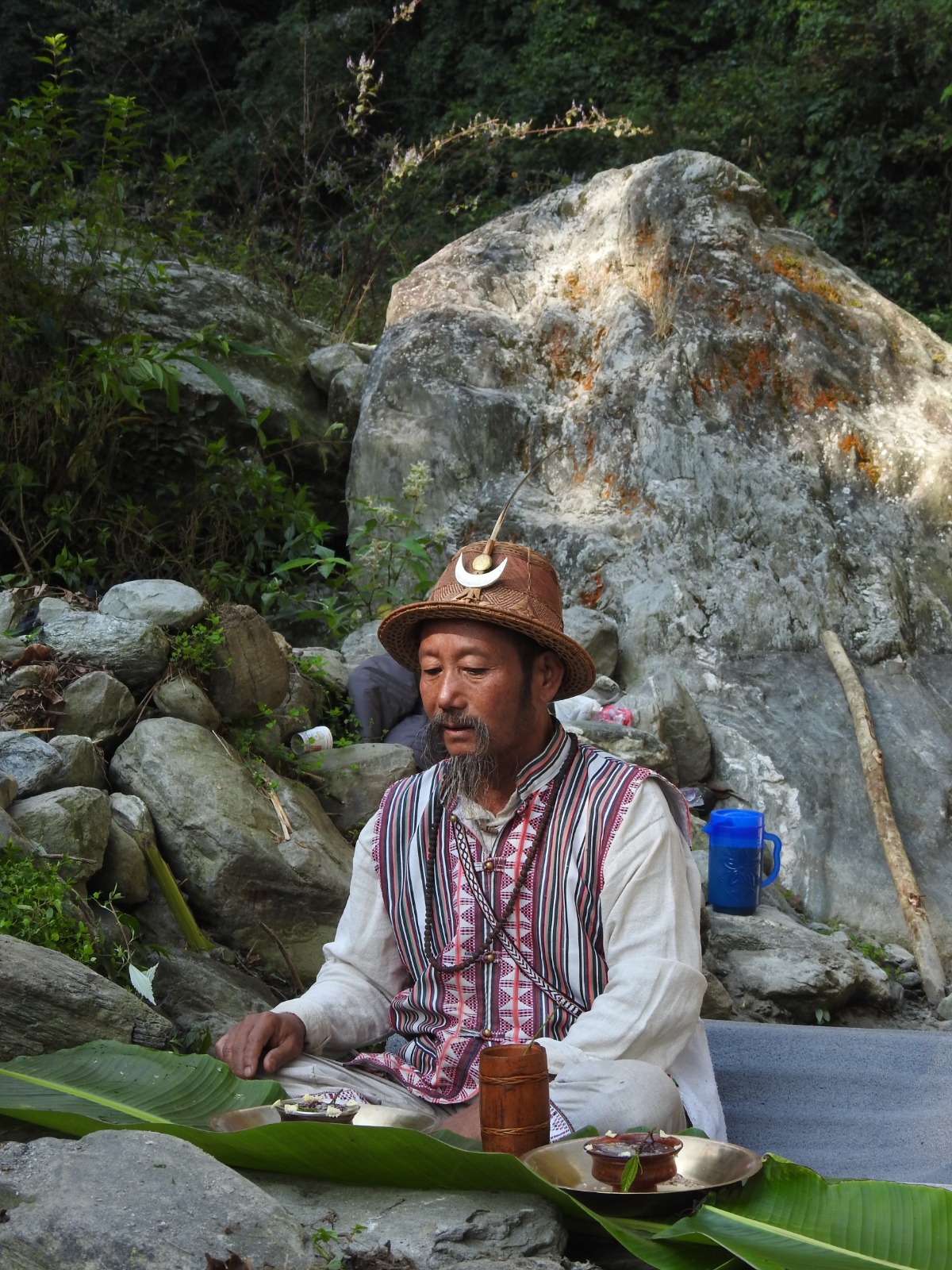
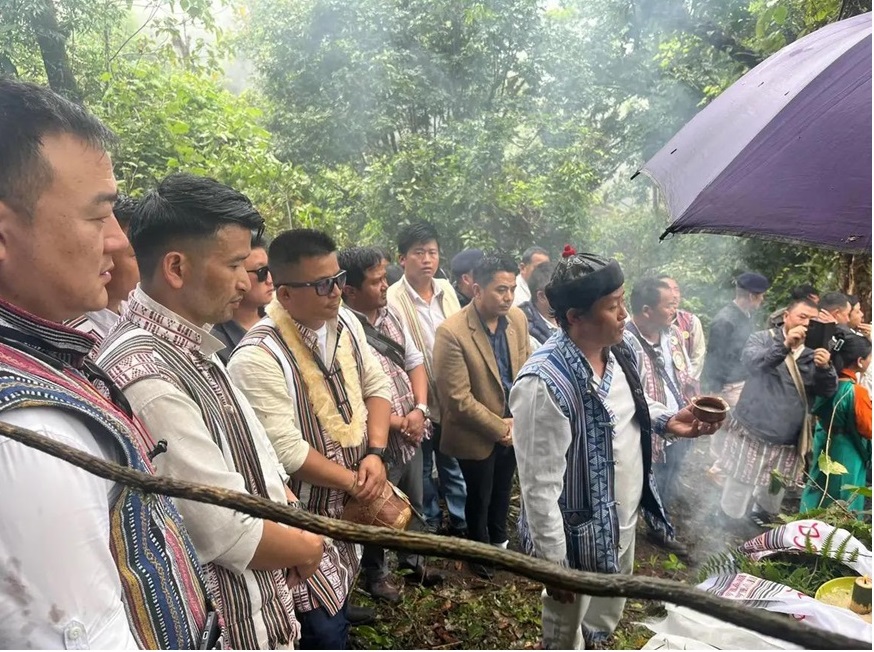
Ritual requesting protection, August 2025. Photo: Pema Yangden Lepcha
The construction process beginns with a rituls performed by the Lepcha religious specialist (boontheeng or mun) to the local guardians of the
land and water to protect the builders and ends with another ritual to protect all the people crossing the bridge.
Beyond its practical use, the Lepcha cane bridge holds deep cultural significance. It embodies a holistic system of knowledge, including
forest stewardship, material preparation, construction techniques and community cooperation. In a fragile mountain ecosystem, it reflects a
sustainable and adaptive way of living. Today, the tradition continues to be valued as a powerful symbol of Lepcha identity, ingenuity and
harmonious coexistence with nature.
DST initiated the documentation process in 2025 with an inception workshop, during which community
consent was obtained for the bridge documentation and its subsequent submission to state and national
inventories, as well as to the UNESCO Representative List of the Intangible Cultural Heritage of Humanity.
Committees were also established to support the process.
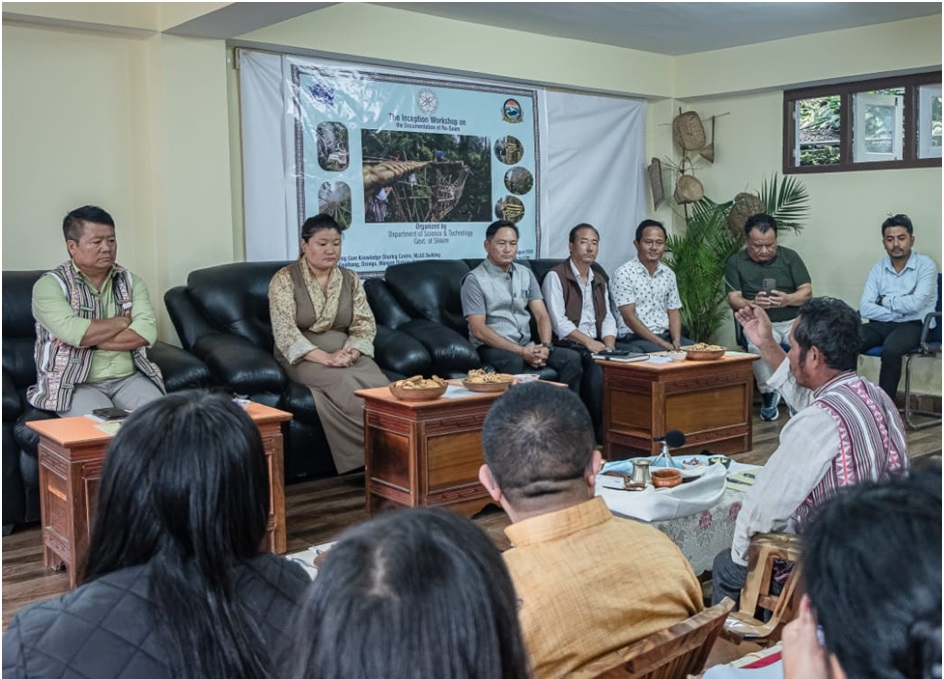
Practices of community consent, Dzongu, August 2025. Photo: Kunga Tashi Lepcha
The local communities of Hee Gyathang and Sangdong in Dzongu came together to build a traditional Lepcha cane bridge over the Mani Kyong. A team from DST documented the process. Future awareness and capacity-building projects related to the Lepcha traditional cane bridge are planned in other districts of Sikkim
Contact Us
For IPR-related support, contact the IPR Section at:
SSCS&T, Science & Technology DepartmentGovernment of Sikkim
4th Floor, Vigyan Bhawan,
Deorali, Gangtok - 737102
Shri.Rajdeep Gurung ,Assistant Scientific Officer
Photographs